Speech Therapy
Speech therapy (ST) works on pronunciation, voice and comprehension. The programme covers speech breathing, the muscles of the mouth and the articulatory organs, plus practising speech in real situations.
How the procedure works
Speech therapy (ST) is the rehabilitation field that deals with speech and communication: assessing, diagnosing and correcting difficulties with pronunciation, voice and comprehension. At Boya Hospital, speech therapy is part of the comprehensive programme and works alongside physical therapy, occupational therapy and sensory integration.
What the therapist works on
- Oral muscle training — strengthening the muscles involved in articulation.
- Voice production — work on the strength and quality of the voice.
- Understanding and expressing thoughts — developing the ability to understand what is said and formulate a reply.
The goal is to help a child regain or improve the ability to communicate in words. This matters especially in speech developmental delay and in dysarthria, which is common in cerebral palsy and other neurological conditions.
Breathing and voice production
Correct speech breathing is the foundation of fluent, intelligible speech. This block includes:
- coordinating chest and abdominal breathing — the chest and the diaphragm, the main breathing muscle, working together;
- training breath depth: the larger the exhalation, the longer the phrase a child can produce without a pause;
- separate breathing through the mouth and nose — control over the airflow;
- exercises for clear and sustained production of sounds.
The articulatory organs
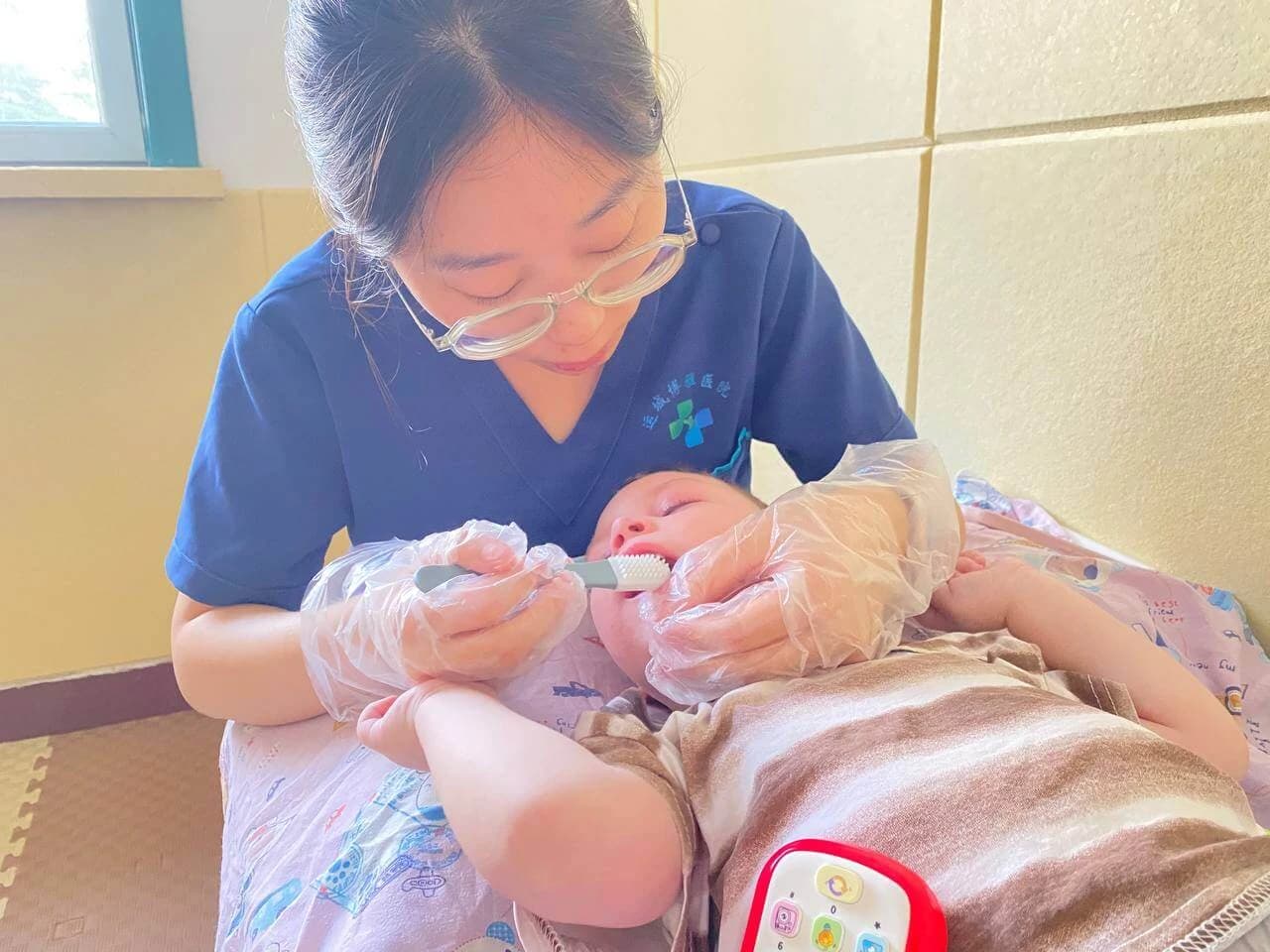
The articulatory organs are the lips, tongue, teeth, palate and lower jaw. The therapist works with each of them:
- eating — chewing and swallowing skills, closely linked to the speech muscles;
- lips — coordination and strength for labial sounds such as "p", "b" and "m";
- tongue — the mobility and precision required for most sounds;
- lower jaw — control over opening and closing the mouth while speaking;
- soft palate — exercises for its closure, to remove the nasal quality from the voice.
Voice and articulation
Work then moves on to sound quality and intelligibility: strength and resonance of the voice, precision of individual sounds, rhythm and intonation — correct stress, pace and phrase melody. A separate block is language situations: dialogues, games and short stories, where speech is used for its purpose rather than only inside an exercise.
Why it matters
Speech reaches far beyond pronunciation. A child who is understood finds it easier to talk to peers and adults, feels more confident and engages more actively in learning. That is why speech therapy is almost always combined with other rehabilitation methods — physical therapy, occupational therapy and sensory integration.
Speech and language assessment
The therapist assesses comprehension, sound production, voice quality, breathing and the work of the articulatory muscles, as well as chewing and swallowing skills.
A programme by focus area
A programme is assembled from three blocks — breathing and voice production, articulatory movement, voice and articulation. Priorities depend on what limits speech the most.
Daily sessions
Sessions are one-to-one: breathing exercises, oral motor work, work with the lips, tongue and jaw, sound practice and, where indicated by a doctor, apparatus-assisted muscle stimulation.
Carrying speech into conversation
New skills are consolidated in real situations — dialogues, games, short stories. The therapist shows parents exercises they can repeat at home.
How Sessions Look
Indications and contraindications
Indications
Contraindications

What diagnoses it helps with: Speech Therapy
Book a free consultation
Send us the medical records and a short video — Boya doctors will review the materials and tell you how they can help. A coordinator will get back to you within 5 minutes.