
Sensory Integration
Sensory integration is the neurological process by which the brain organises and interprets signals from the senses. Training helps a child process that information more accurately: sessions run through play — on swings, trampolines, balance equipment and with tactile materials.
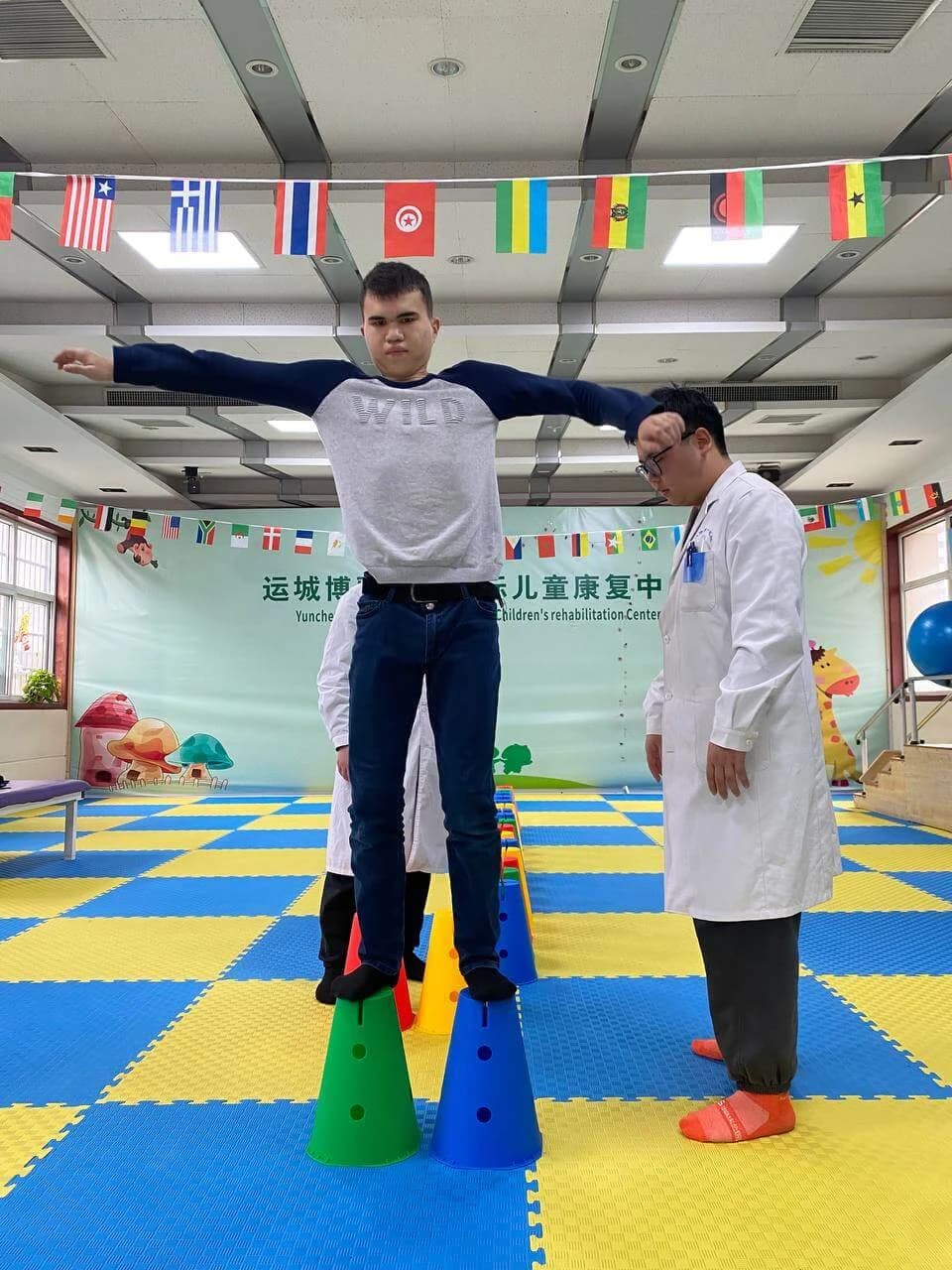
How the procedure works
Sensory integration is the neurological process by which the brain organises and interprets signals from the senses: sight, hearing, touch, taste and smell, as well as vestibular and proprioceptive sensations. When that processing is disrupted, a child struggles to keep their balance, to respond calmly to touch or noise, to stay focused on a task. Sensory integration training helps the brain handle that stream of information more accurately.
Vestibular balance
The vestibular system sits in the inner ear and is responsible for the sense of balance, movement coordination and body orientation in space. Activities involving swinging, spinning and changes of body position help it work more reliably — which matters especially for children with cerebral palsy and other neurological conditions.
What we use: swings and suspended equipment, balance boards and pathways, rolling on a cylinder, spinning on exercise balls, a skateboard (prone, sitting, standing), a trampoline, walking a balance beam, a balance bike.
Proprioception — the sense of one's own body
The proprioceptive system tells the brain about body position, the force of muscle contraction and the position of the joints. Exercises with deep pressure, stretching and resistance help a child feel their body better and control their movements.
What we use: gentle joint compression, the "wheelbarrow" game (the child walks on their hands while an adult supports the legs), weighted balls and sandbags, a children's climbing wall, throwing and catching balls, jumping on a trampoline and on exercise balls, pull-ups, rolls, handstands with support.
Tactile processing
The tactile system handles the perception of touch, pressure, texture and temperature. Tactile training helps a child respond more calmly to different sensations — which matters both when sensitivity is heightened and when it is reduced.
What we use: games with large and massage balls, a ball pool, blanket games, light touch with a feather or a soft brush, "treasure hunts" in containers of grain, sand or beans, modelling with plasticine, clay and dough.
What the training gives
Regular sessions help a child move and balance more confidently, hold attention longer, tolerate noise and touch more calmly, and join in play and conversation with peers more willingly. The equipment and the play format make the process engaging — and that directly affects how much a child is willing to practise.
What parents should know
Sensory integration works alongside the rest of the centre's programme: physical therapy, occupational therapy and speech therapy. The programme is built individually and revised as the course goes on — what was too hard yesterday becomes an ordinary task a few weeks later.
Sensory profile assessment
The specialist observes how the child responds to movement, touch, sound and light: where sensitivity is heightened and where, on the contrary, the input is not enough.
Choosing the focus areas
Out of three areas — vestibular, proprioceptive and tactile — the priorities for this particular child are selected, taking age and motor abilities into account.
Play-based sessions on equipment
Sessions use swings, a trampoline, balance boards and pathways, exercise balls, tactile materials and a ball pool. The playful format keeps the child interested.
Reviewing the programme
As the child tolerates the load more calmly, tasks become harder: height, speed, new textures and more complex movement combinations are added.
How Sessions Look
Indications and contraindications
Indications
Contraindications
What diagnoses it helps with: Sensory Integration
Book a free consultation
Send us the medical records and a short video — Boya doctors will review the materials and tell you how they can help. A coordinator will get back to you within 5 minutes.