Rehabilitation for Tone at Boya Clinic
Boya Hospital in Yuncheng admits children with muscle tone disorders — spasticity, hypotonia, and dystonia. The program is intensive: 6–9 sessions a day, 6 days a week; exercise therapy and apparatus physiotherapy are combined with Tui Na massage, acupuncture, and warm Traditional Chinese Medicine procedures. The recommended course is 2–3 months, with payment on site and no prepayment.
What is Muscle Tone Disorders?
Muscle tone is the constant light tension in muscles that holds the body in a posture and prepares it for movement. Tone is set by the nervous system, so disturbances almost always say something about how the brain and nerve pathways are working. Children show three patterns: tone is increased (spasticity), decreased (hypotonia), or fluctuating (dystonia). On its own this is not a diagnosis but a description of the state of the muscles — the cause is determined by a doctor. Either way, tone has to be worked with: it determines whether the child will be able to sit, stand, and walk.
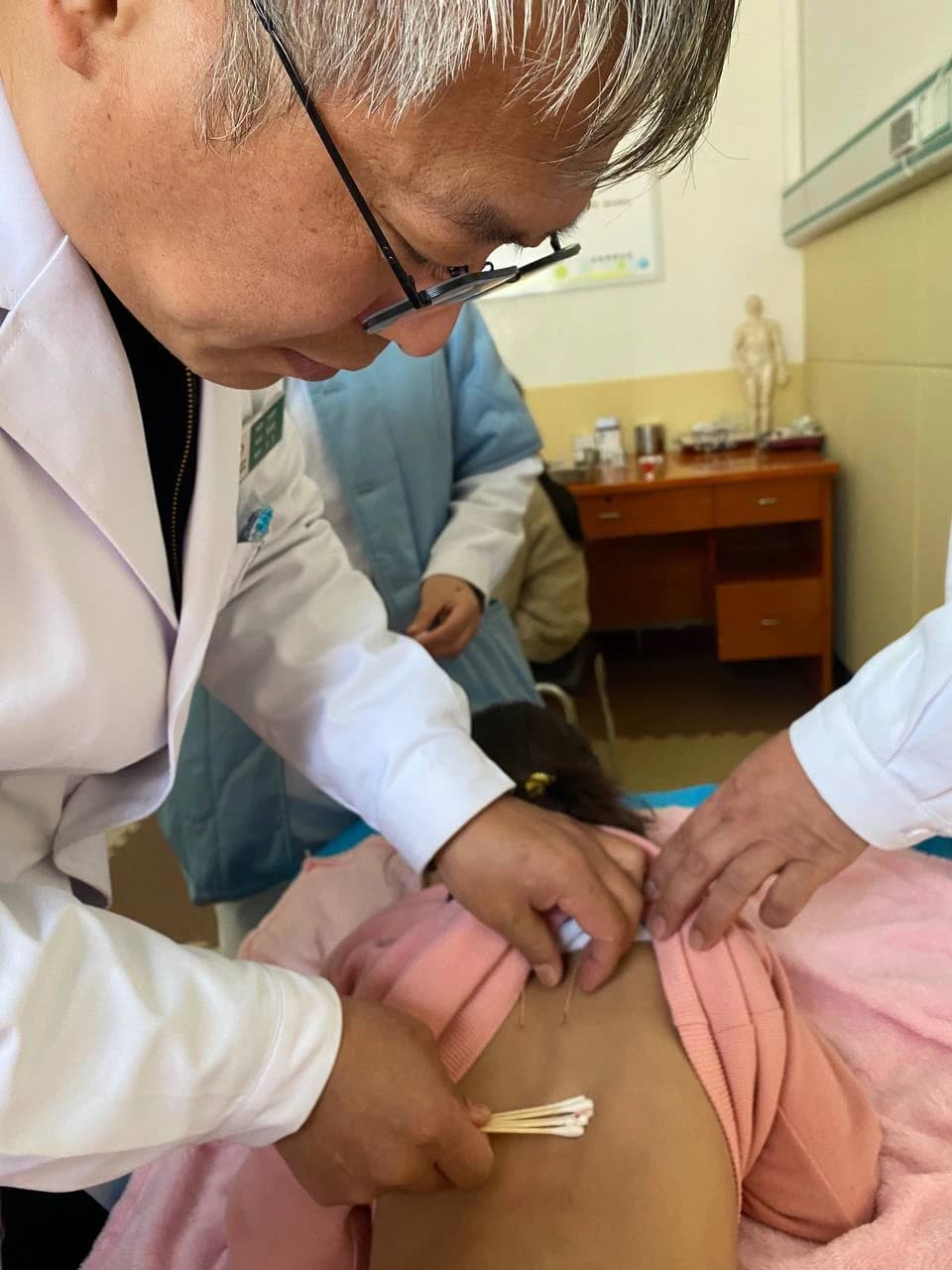
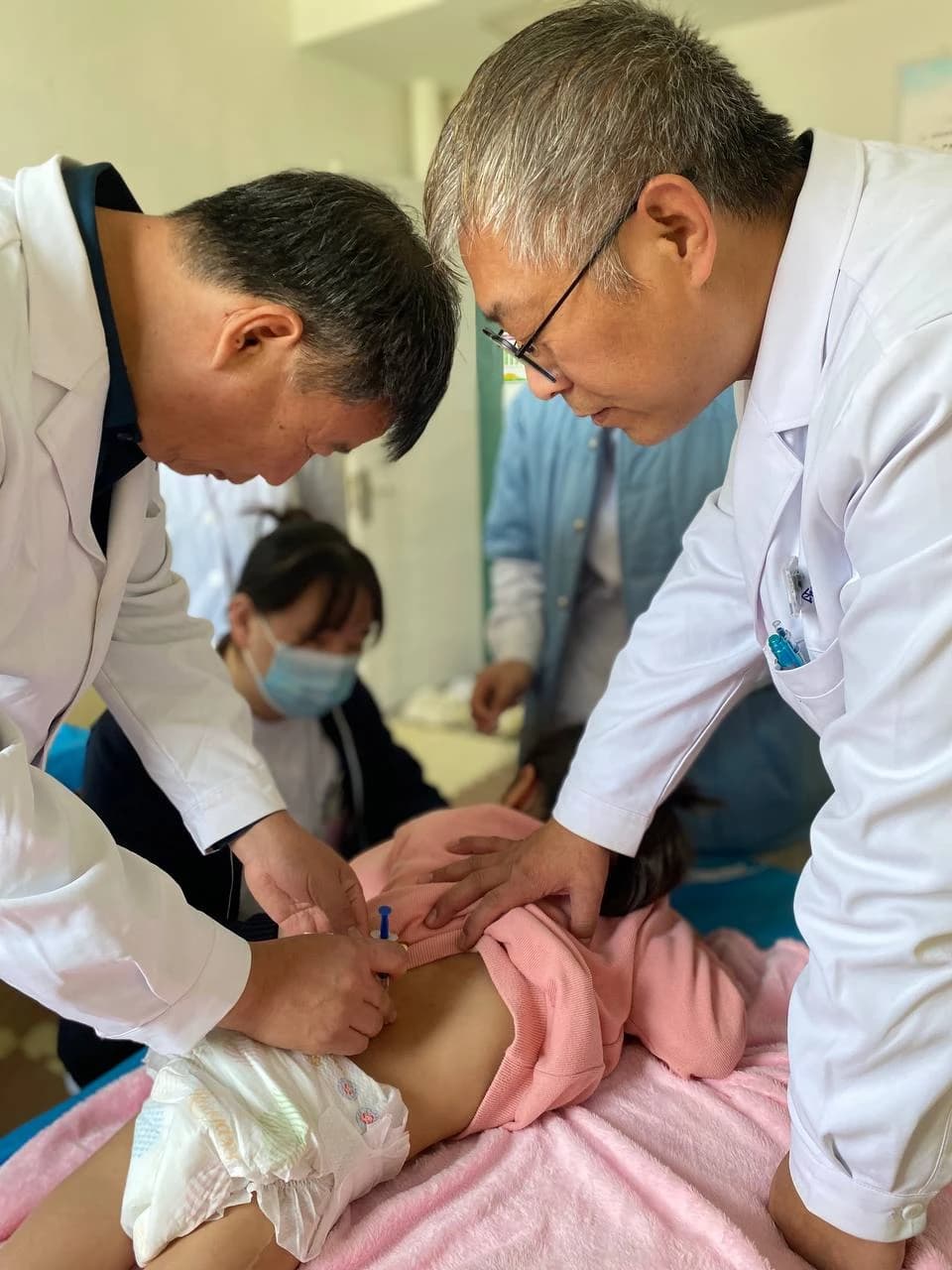
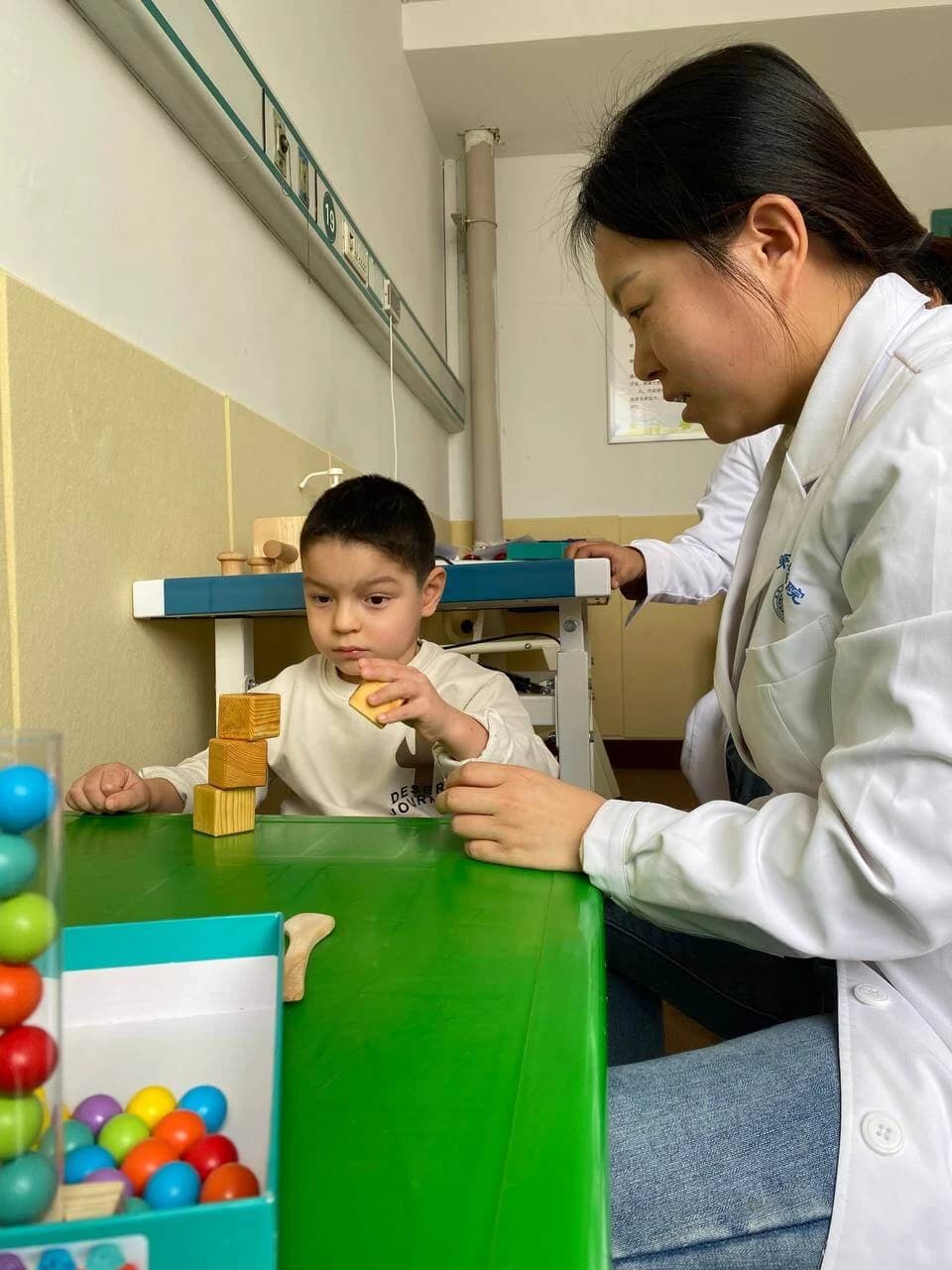
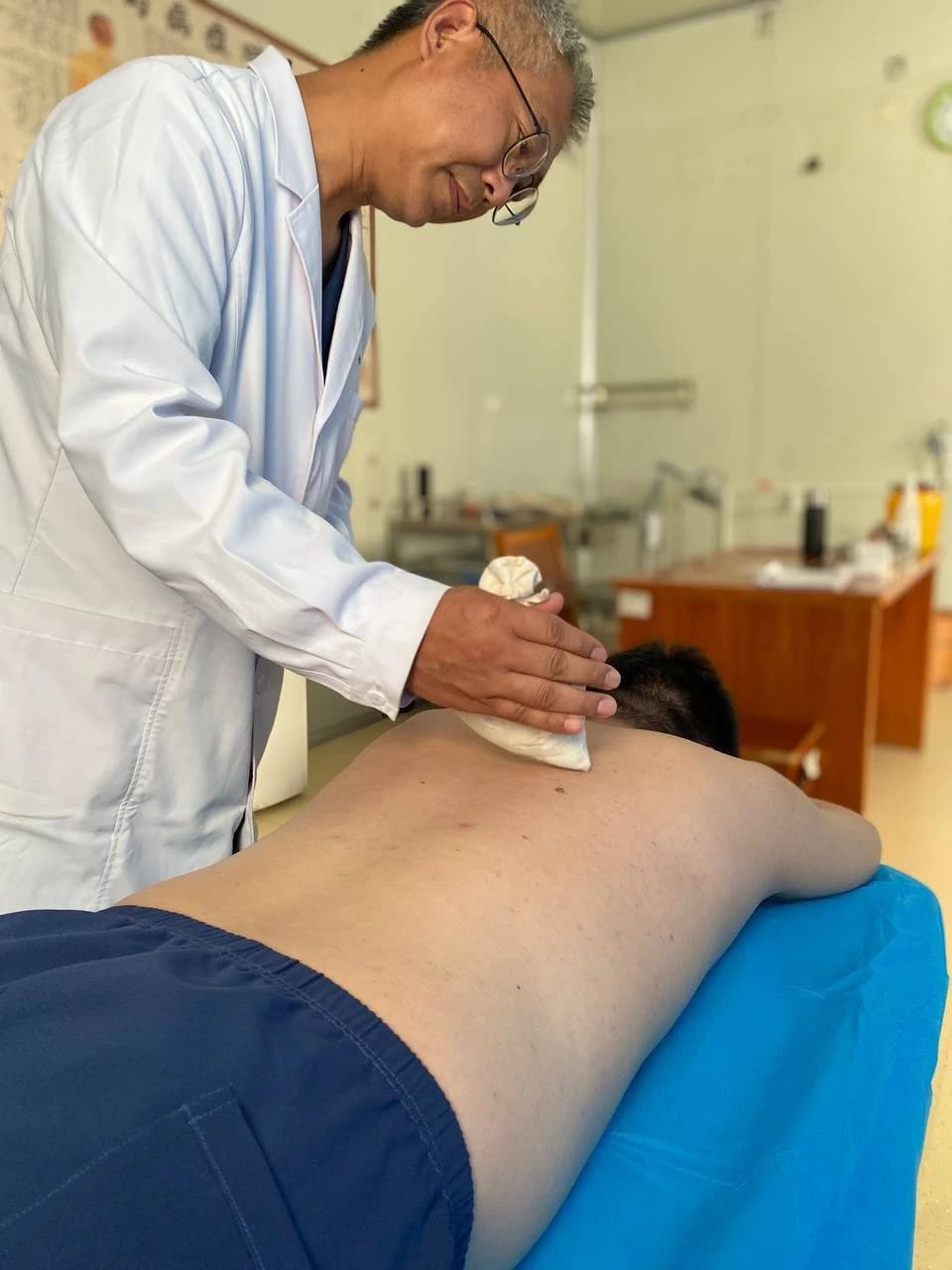
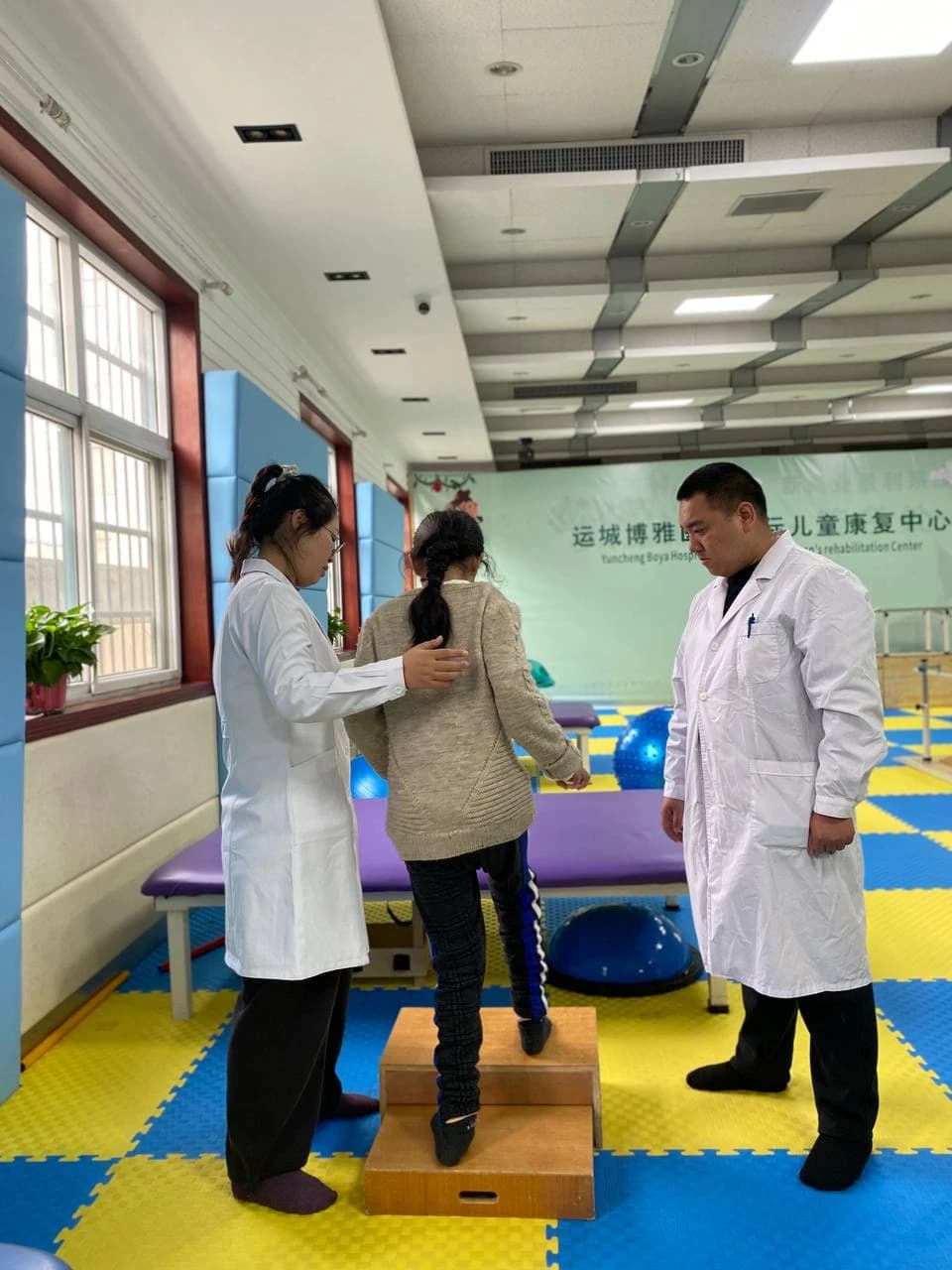
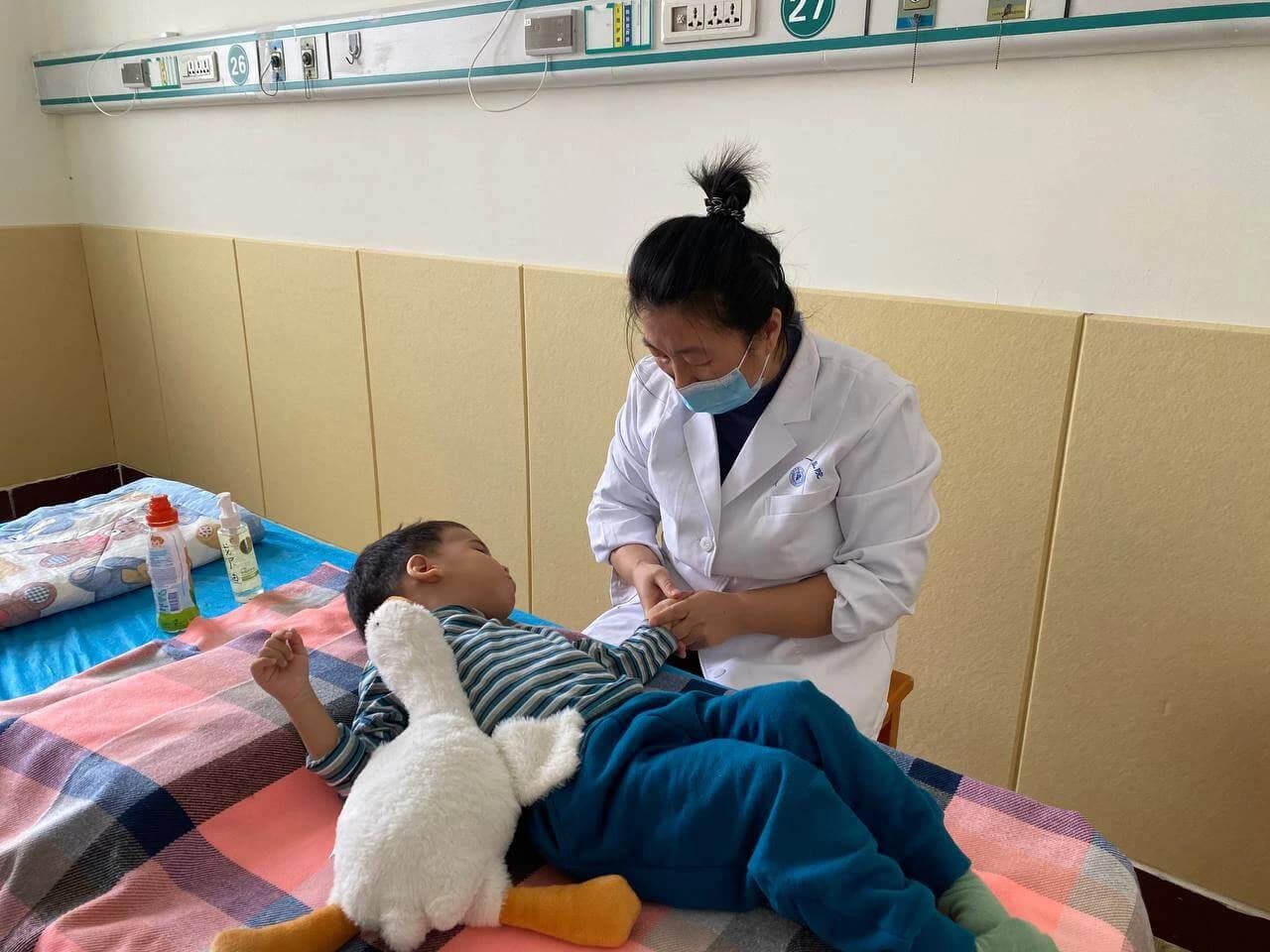
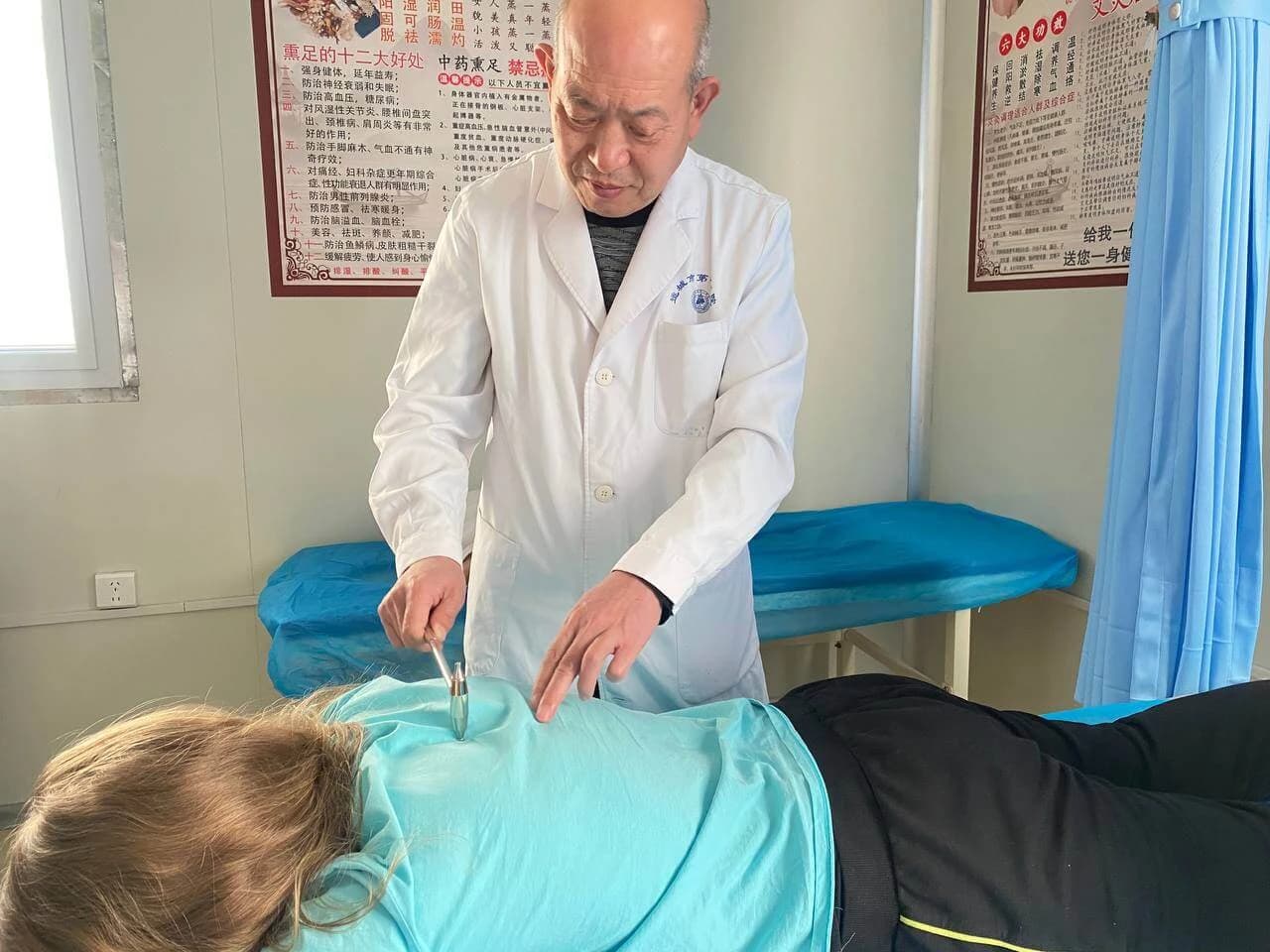
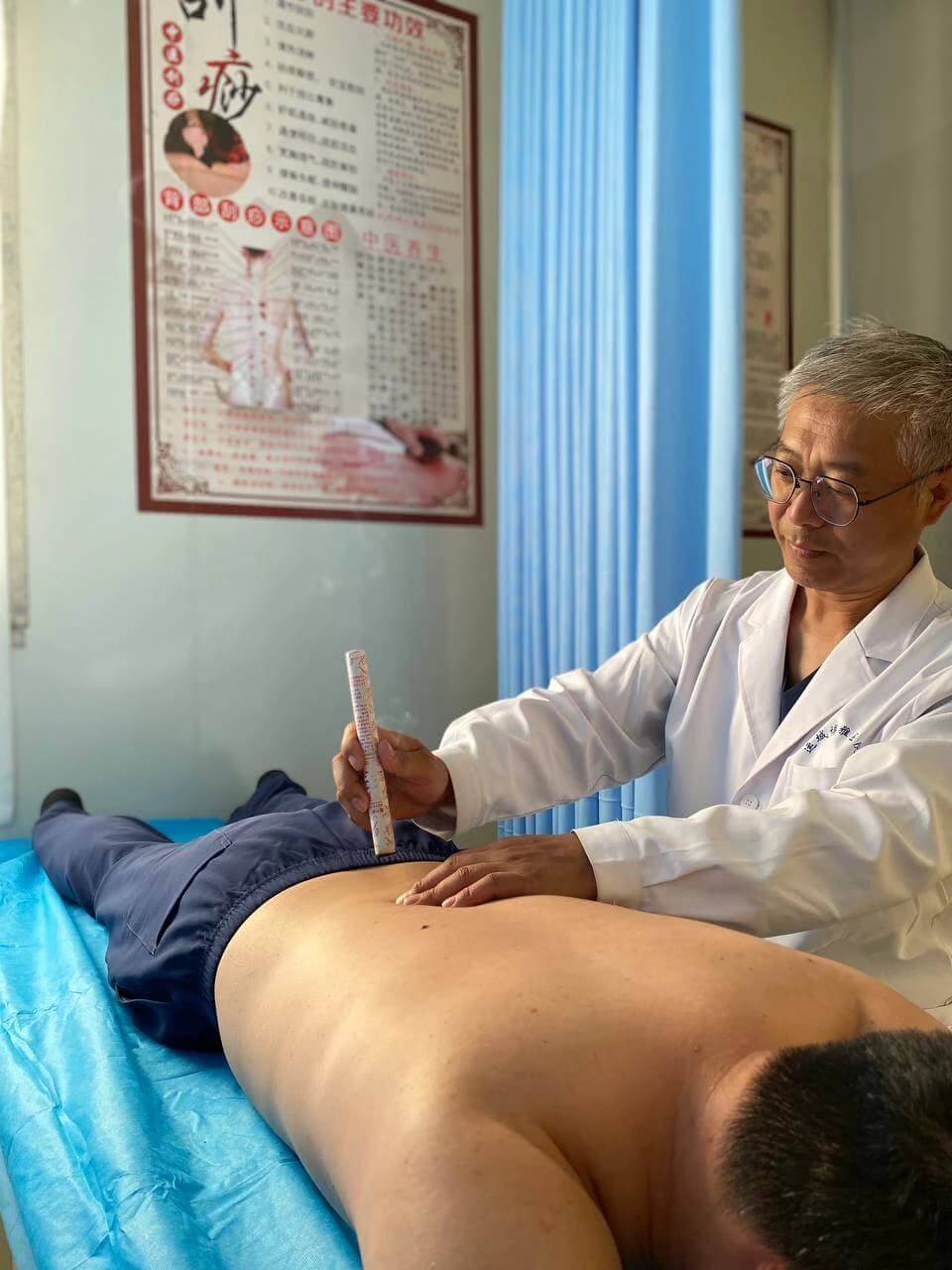
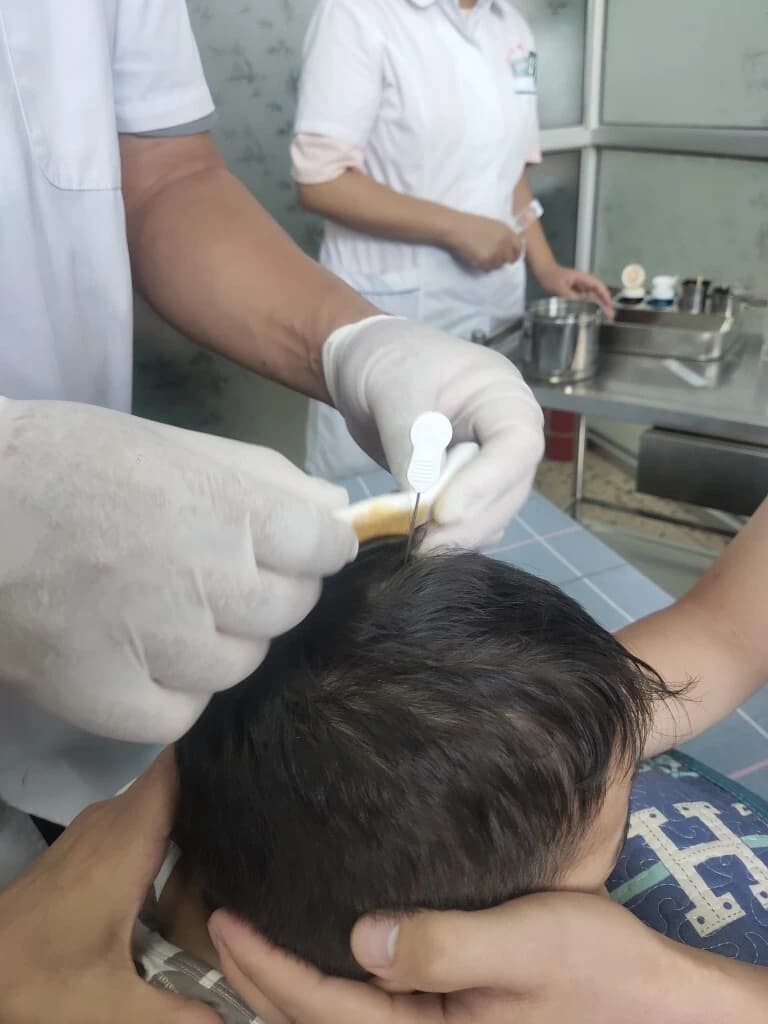
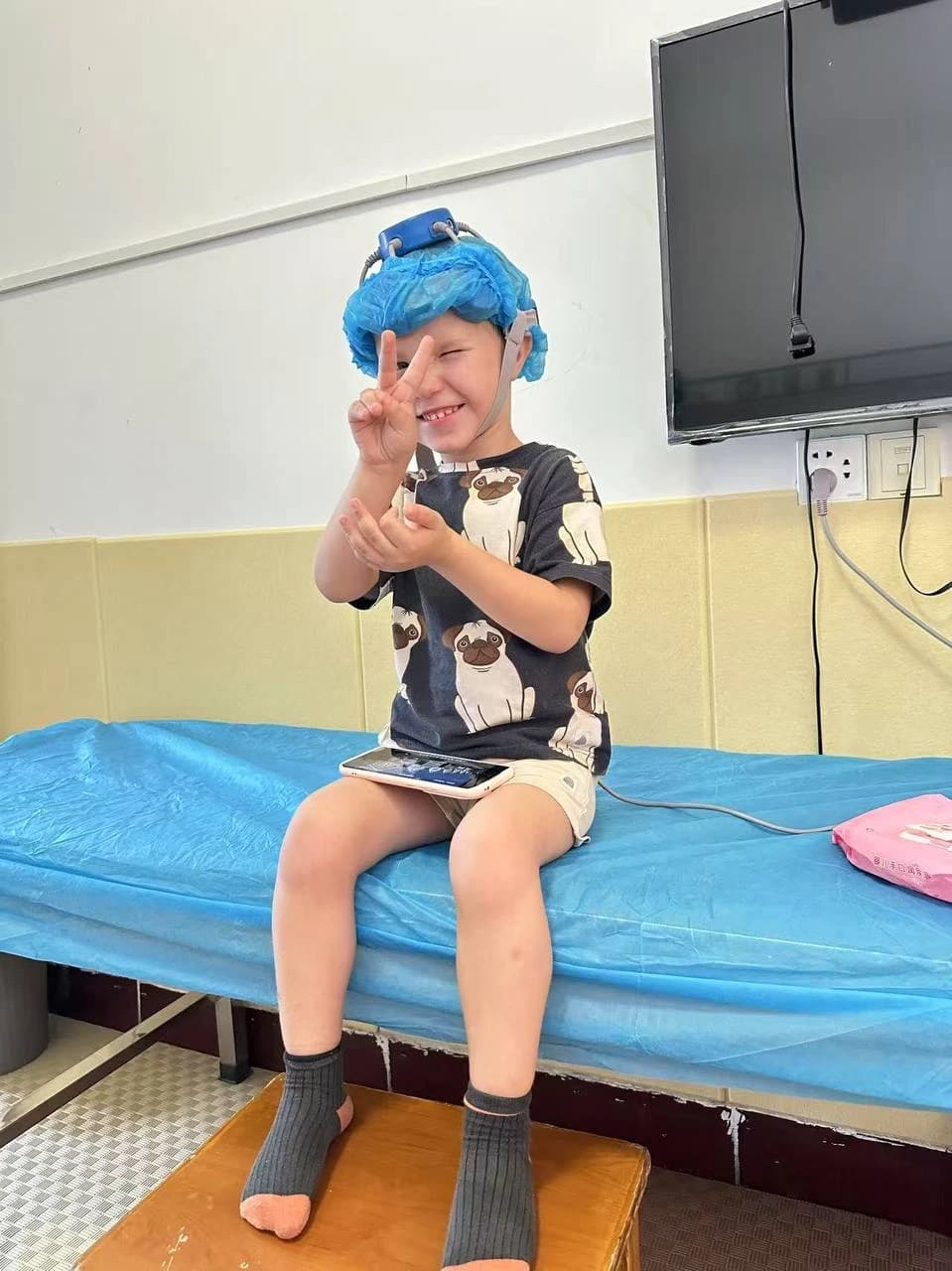
At Boya Hospital (Yuncheng, Shanxi Province), work with tone is part of the center's core focus — pediatric neurological rehabilitation. Before the start, the doctor carries out a functional assessment: muscle resistance to passive movement, range of joint motion, postures, head and trunk control. Based on this data, an intensive program is assembled — 6–9 sessions a day, 6 days a week: exercise therapy and physical rehabilitation (Bobath, Vojta, CME methods), pediatric Tui Na massage, apparatus physiotherapy, acupuncture, and meridian stimulation. For pronounced spastic tension, needle-knife therapy is added when indicated, while warm Traditional Chinese Medicine procedures — herbal compresses and moxibustion — help release tight muscles.
Spasticity, hypotonia, dystonia — what they look like at home
Spasticity: the fist is hard to open, the legs are hard to part when changing clothes, the child folds into the same posture again and again, and pushes up onto the toes when trying to stand. Hypotonia: the child is soft, slips out of your arms, is slow to hold their head or sit without support, tires quickly, and often keeps the mouth slightly open. Dystonia: tension and posture shift on their own — when the child is excited, crying, or reaching for an object, the hand veers to the side and movements become sweeping. The patterns often mix: a floppy trunk can go together with tense arms and legs. That is why the program is built for the specific child, not for the wording in a medical report.
What matters for parents
Tone is not something corrected in a single procedure. Spastic muscles need to be relaxed and stretched regularly, weak ones strengthened, and the result maintained day after day — which is exactly why the recommended course is 2–3 months with sessions 6 days a week. The honest goal is to keep tone within a workable range so the child masters new movements and does not develop fixed contractures. Starting is simple: send your child's documents — the neurologist's report, MRI, EEG, and other records. The document-based consultation is free, and there is no prepayment — you pay on site and only for what your child has actually received.
Causes
Muscle tone is set by the nervous system, so its disturbances are most often linked to damage to the central nervous system during pregnancy, birth, or the first months of life: oxygen deprivation, prematurity, birth trauma, infections. Tone is also altered in the various forms of cerebral palsy; less often the cause is genetic or metabolic.
Symptoms
With spasticity, muscles are stiff, limbs are hard to straighten, the child clenches their fists and pushes up onto their toes. With hypotonia, the body is soft and floppy, the child holds posture poorly and tires quickly. With dystonia, tone fluctuates: posture and movements change involuntarily, especially when the child is excited.
Diagnostics
Tone is assessed by a neurologist during examination: muscle resistance to passive movement, postures, reflexes, range of joint motion. To identify the cause, the pregnancy and birth history is reviewed, and MRI or other tests may be ordered. Before the course, Boya carries out its own functional assessment.
Prognosis and rehabilitation approach
Tone responds well to regular work: spastic muscles can be relaxed and stretched, weak ones strengthened. The goal of rehabilitation is not to remove tone in one go, but to keep it within a workable range so the child can master new movements and avoid developing fixed contractures.
How rehabilitation works
Diagnostics
Comprehensive examination and patient assessment by an international team of specialists
Rehabilitation plan
Development of an individual rehabilitation program considering diagnosis specifics
Therapy
Intensive course of procedures: physical therapy, massage, physiotherapy, acupuncture and other methods
Results
Progress evaluation, home recommendations and maintenance therapy plan
Rehabilitation procedures: Muscle Tone Disorders
Frequently asked questions: Muscle Tone Disorders
Book a free consultation
Send us the medical records and a short video — Boya doctors will review the materials and tell you how they can help. A coordinator will get back to you within 5 minutes.