PIMS — Meridian Stimulation
PIMS — full information meridian stimulation: a comprehensive methodology based on acupuncture and the theory of biological holography. One programme brings together scalp acupuncture, body acupuncture, pharmacopuncture, collagen threads, massage and sessions with rehabilitation specialists.
How the procedure works
Full information meridian stimulation (PIMS) is a rehabilitation methodology based on the principles of traditional Chinese medicine — above all acupuncture — and on the theory of biological holography. The idea behind the method is to work not with a single procedure but with the meridians of the whole body at once, combining several stimulation techniques into one coordinated programme.
How it works
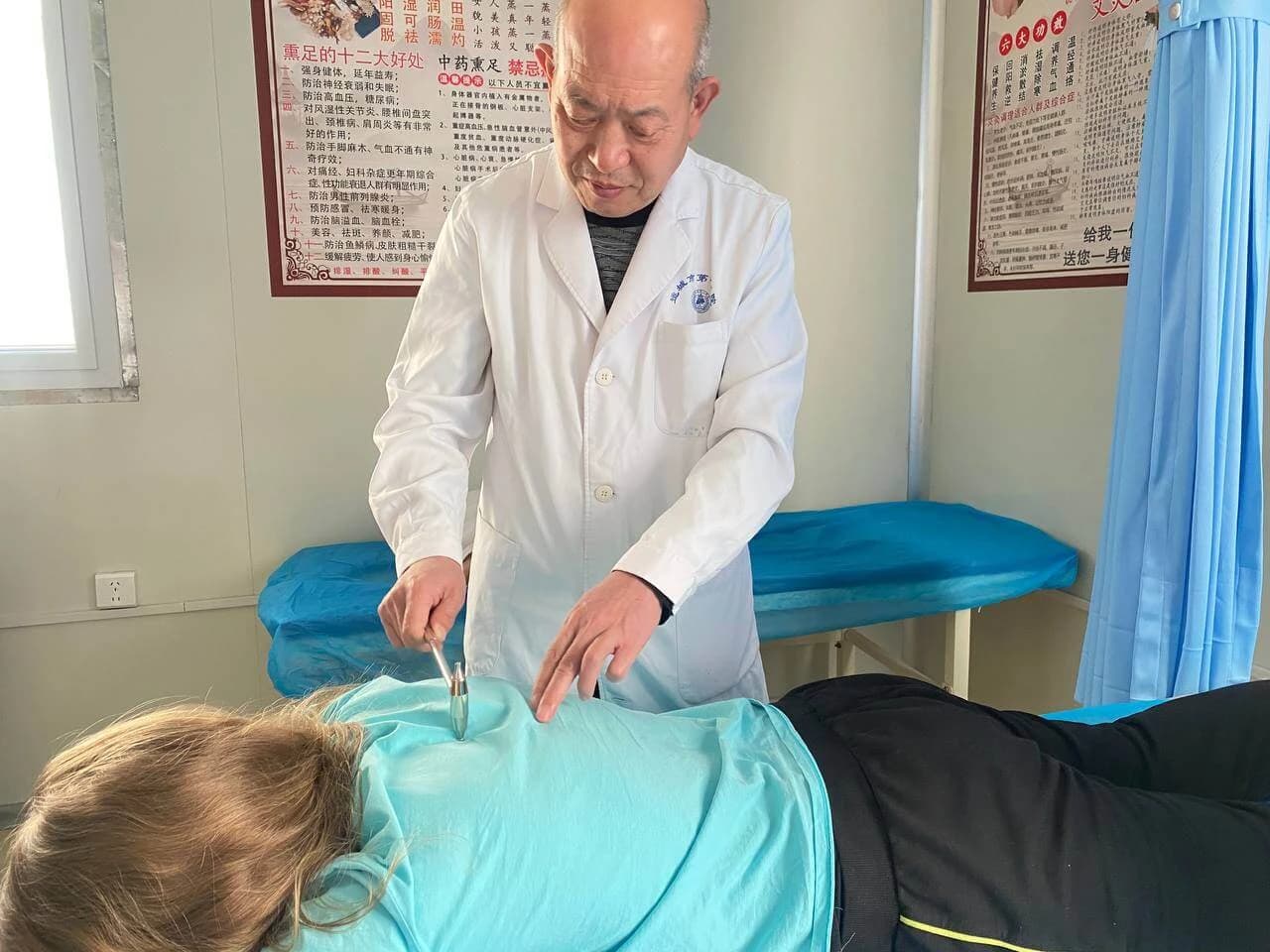
- Meridian stimulation. Biologically active points are activated with scalp (cerebral) acupuncture, acupuncture for the arms, legs and back and, where indicated, collagen thread implantation. According to TCM this strengthens the flow of the vital energy Qi along the meridians. Pharmacopuncture (micro-doses of medication injected into active points) reinforces the stimulation.
- Balancing Yin and Yang. The work aims to restore harmony between the Yin (passive) and Yang (active) principles of the body — in TCM this is a condition of inner equilibrium.
- Harmonising Qi and blood. Qi is the vital energy and blood is its material carrier. In TCM, clearing stagnation of Qi and blood is associated with the restoration of health.
- Regulating the internal organs. Working with the meridians linked to the internal organs aims to normalise their function.
- Improving circulation. Activating blood flow helps supply tissues with oxygen and nutrients.
- Activating nerve and muscle tissue. The stimulation is complemented by therapeutic massage, physical therapy and physiotherapy procedures, as well as occupational therapy and sensory integration sessions.
The holography theory
The theory of biological holography used in PIMS views each part of the body as a reflection of the whole organism. In practice this means the doctor selects treatment zones so as to address the cause of the difficulties rather than only individual symptoms. The method is built on a comprehensive approach: the work covers the whole body, and the set of techniques is tailored to each child.
Use in children's rehabilitation
- Cerebral palsy — the work targets motor function, reduced spasticity, coordination and speech.
- Speech and psycho-speech delay — stimulation of specific points is used to support speech, cognitive development and behaviour.
- ADHD — the programme helps address attention, hyperactivity and impulsivity.
- ASD (autism) — the method is used to support social interaction and communication skills and to reduce stereotyped behaviour.
- Consequences of traumatic brain injury and other neurological conditions — as determined by a doctor.
What else the programme includes
Alongside acupuncture and thread implantation, a PIMS programme may include speech therapy, psychomotor rehabilitation, CME (Cuevas Medek Exercise) — a specialised physical therapy methodology for children with motor disorders — warmed herbal compresses to relax the muscles, and needle-knife therapy. Where necessary the doctor may prescribe medication support.
What parents should know
PIMS is not a single procedure but a way of organising the programme: the doctor selects the set of methods, their sequence and intensity for the individual child and adjusts them as the course progresses. Side effects are minimal when the method is applied correctly, and each technique within the programme has its own indications and contraindications — the doctor assesses them at the examination.
Assessment and programme plan
A TCM doctor and a rehabilitation specialist examine the child, define the leading goals and draw up a plan: which stimulation methods and therapy sessions the programme will include.
Meridian stimulation
The core block — scalp acupuncture, acupuncture for the arms, legs and back, and, where indicated, pharmacopuncture and collagen thread implantation.
Bodywork and therapy sessions
The programme is complemented by therapeutic massage, physical therapy, physiotherapy, occupational therapy and sensory integration sessions — on an individual schedule.
Progress review
The doctor tracks changes in the child's condition and adjusts the set of methods and the intensity of the programme.
How Sessions Look
Indications and contraindications
Indications
Contraindications
What diagnoses it helps with: PIMS — Meridian Stimulation
Book a free consultation
Send us the medical records and a short video — Boya doctors will review the materials and tell you how they can help. A coordinator will get back to you within 5 minutes.