
Rehabilitation for Stereotypies at Boya Clinic
The child rocks, flaps their hands, walks on tiptoe, lines toys up in a row, or repeats the same sounds. Boya Hospital in Yuncheng works with stereotypies not through bans but through sensory integration and a daily routine the child can follow: the point is to understand what the repetition gives them and to offer another way to get the same thing. Sessions run 6 days a week, the course is 2–3 months, with payment on site.
What is Stereotypies?
Stereotypies are monotonous actions a child repeats again and again: rocking, flapping and shaking the hands, walking on tiptoe, tapping, repeating the same sounds and phrases, lining toys up in a row, spinning the wheels of a toy car. The same group includes rituals — a fixed route, the same cup, a strict order of actions — and a hard reaction to any change. Stereotypies are most common in Autism Spectrum Disorder, but they also occur with sensory differences, developmental delay, and anxiety. The main thing for parents to know is that for the child this is not a bad habit but a means of self-regulation: topping up missing sensations or shutting out an excess of noise and bustle.
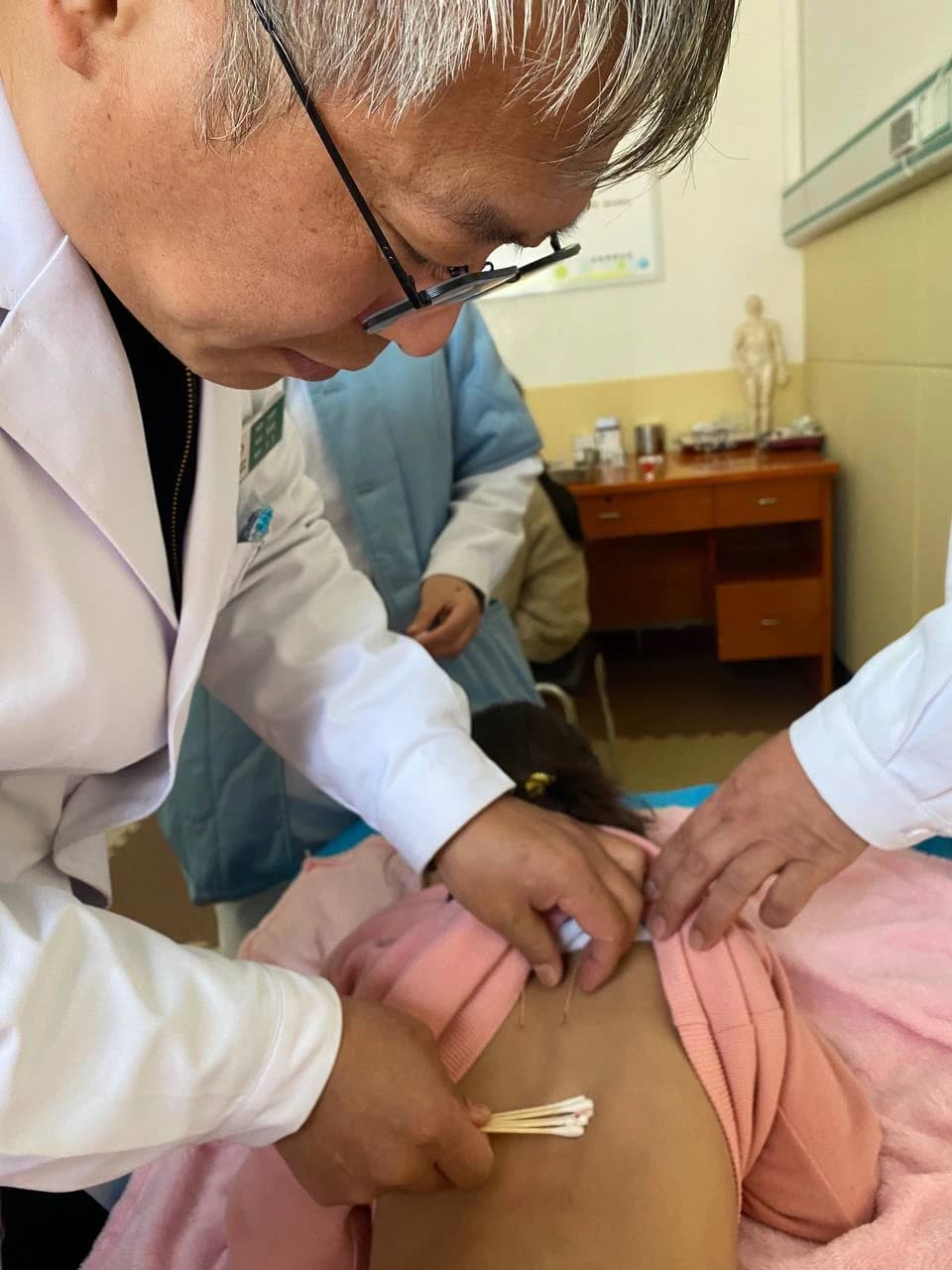
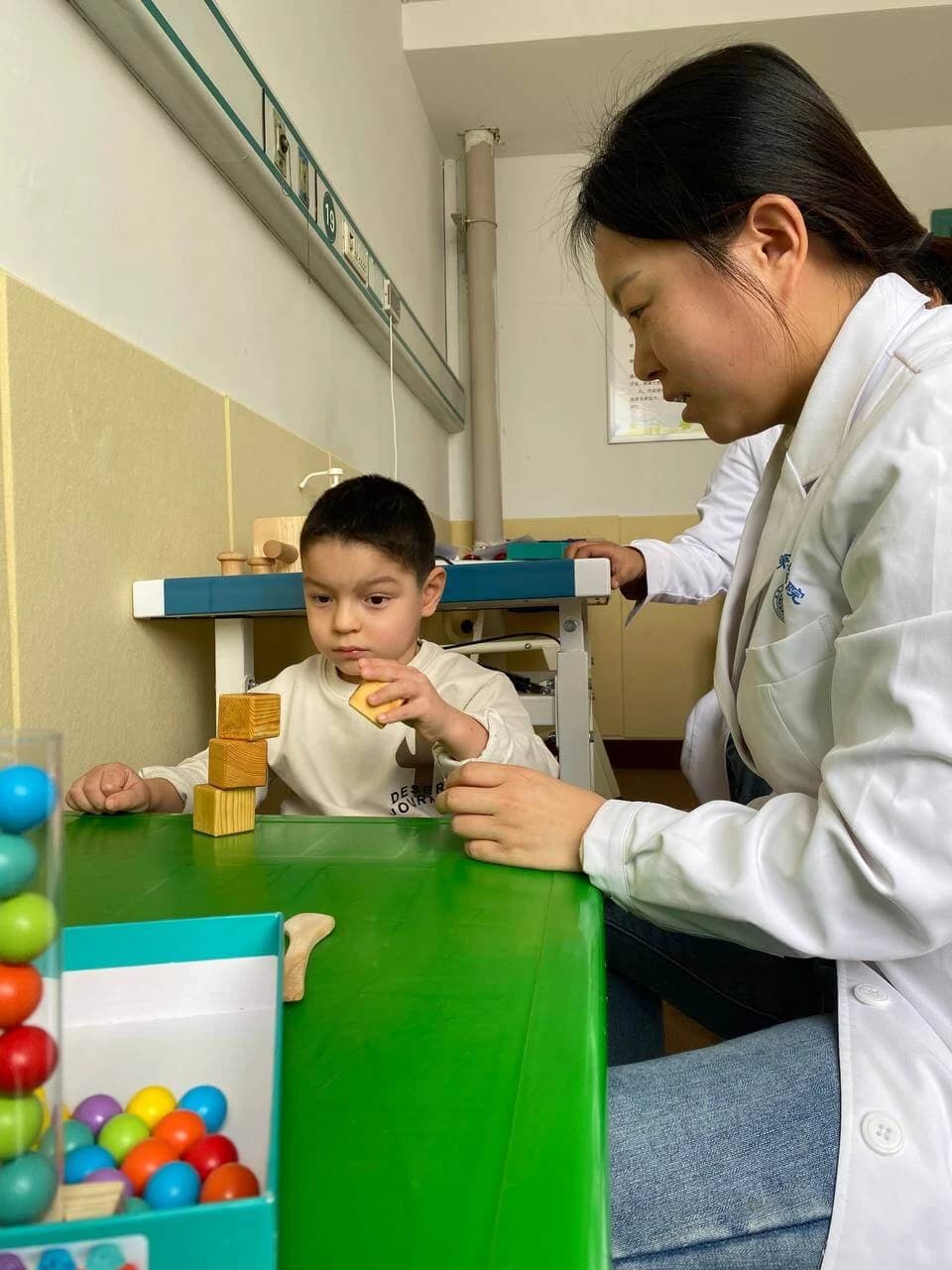
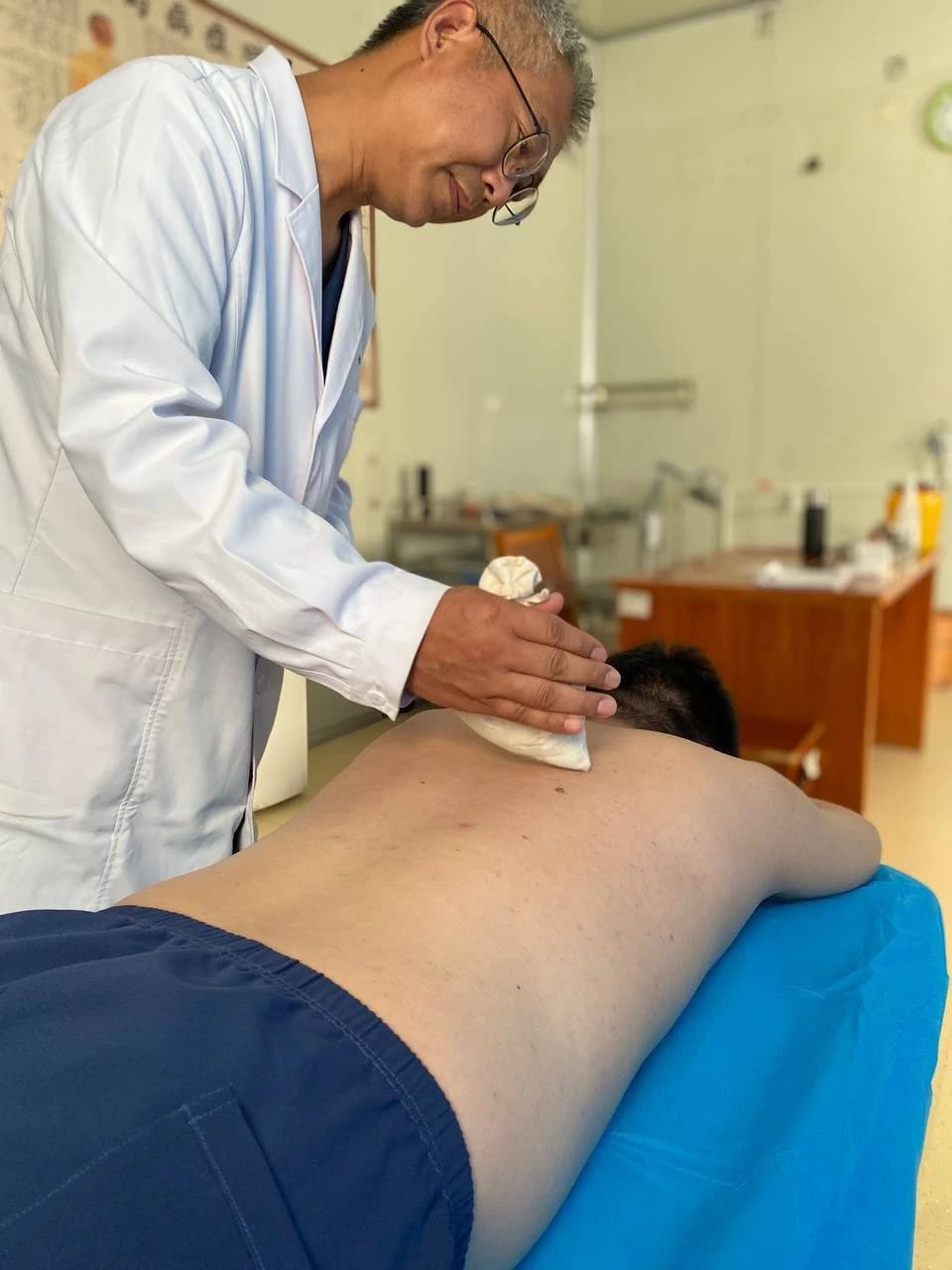
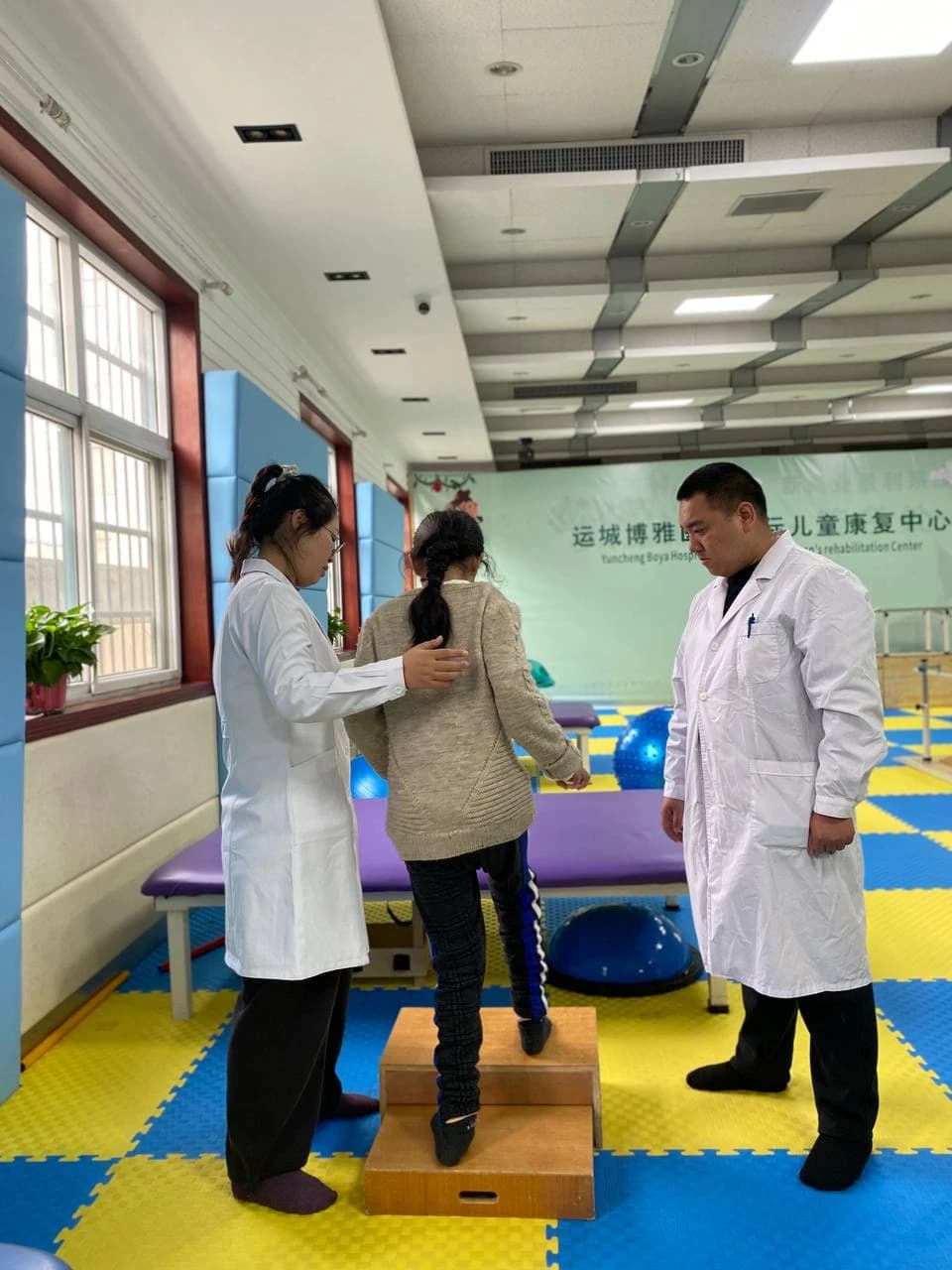
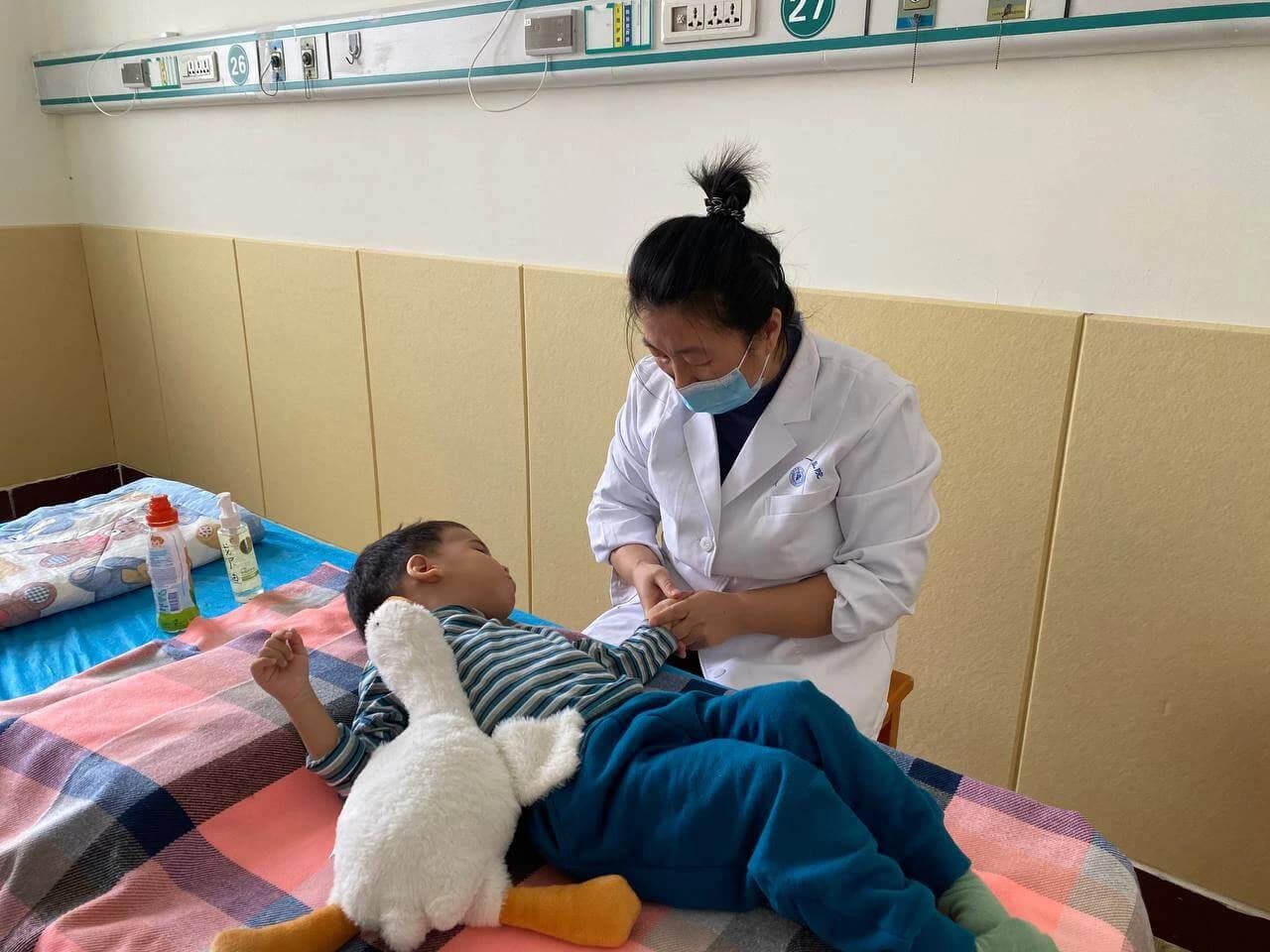
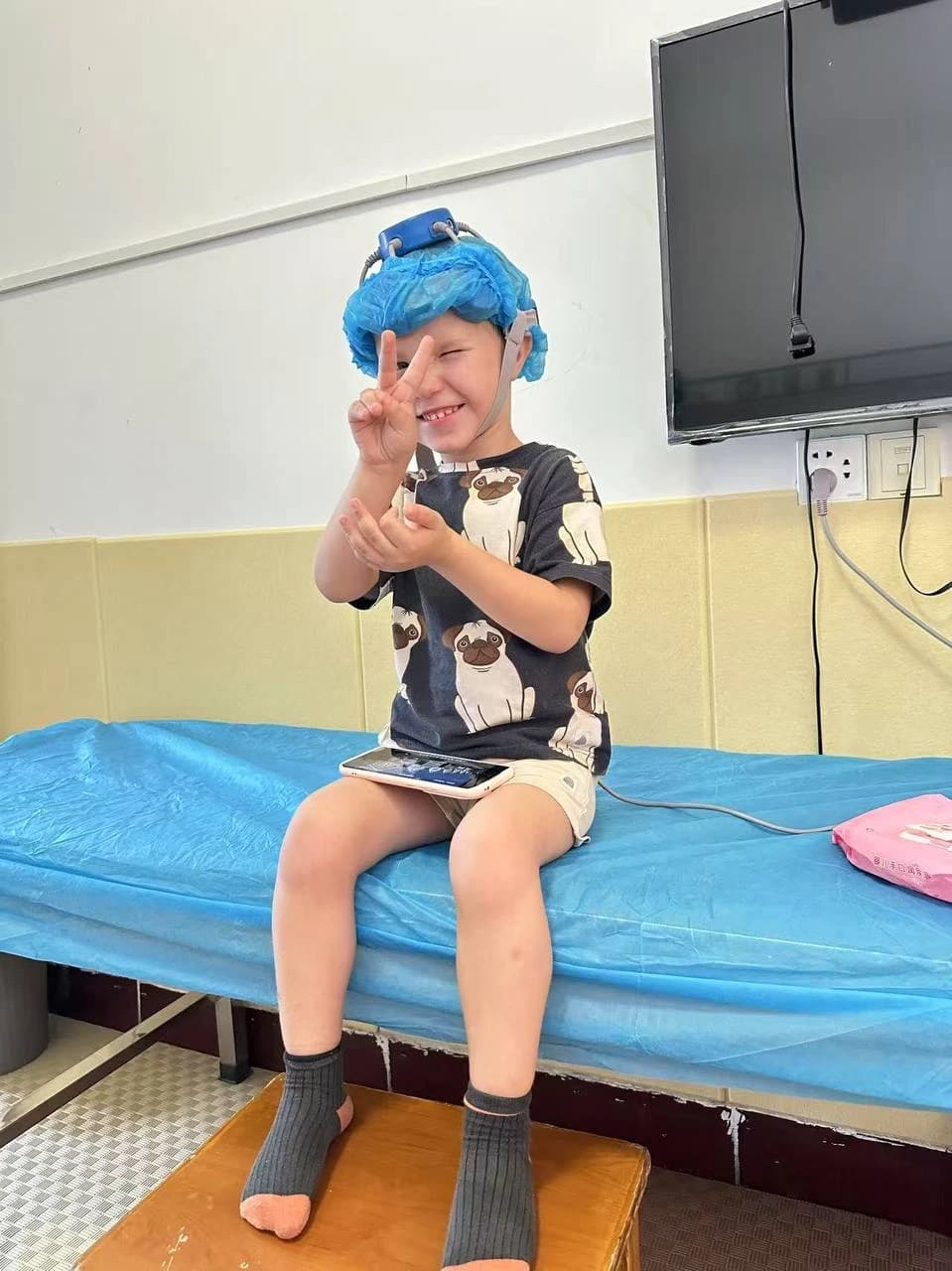
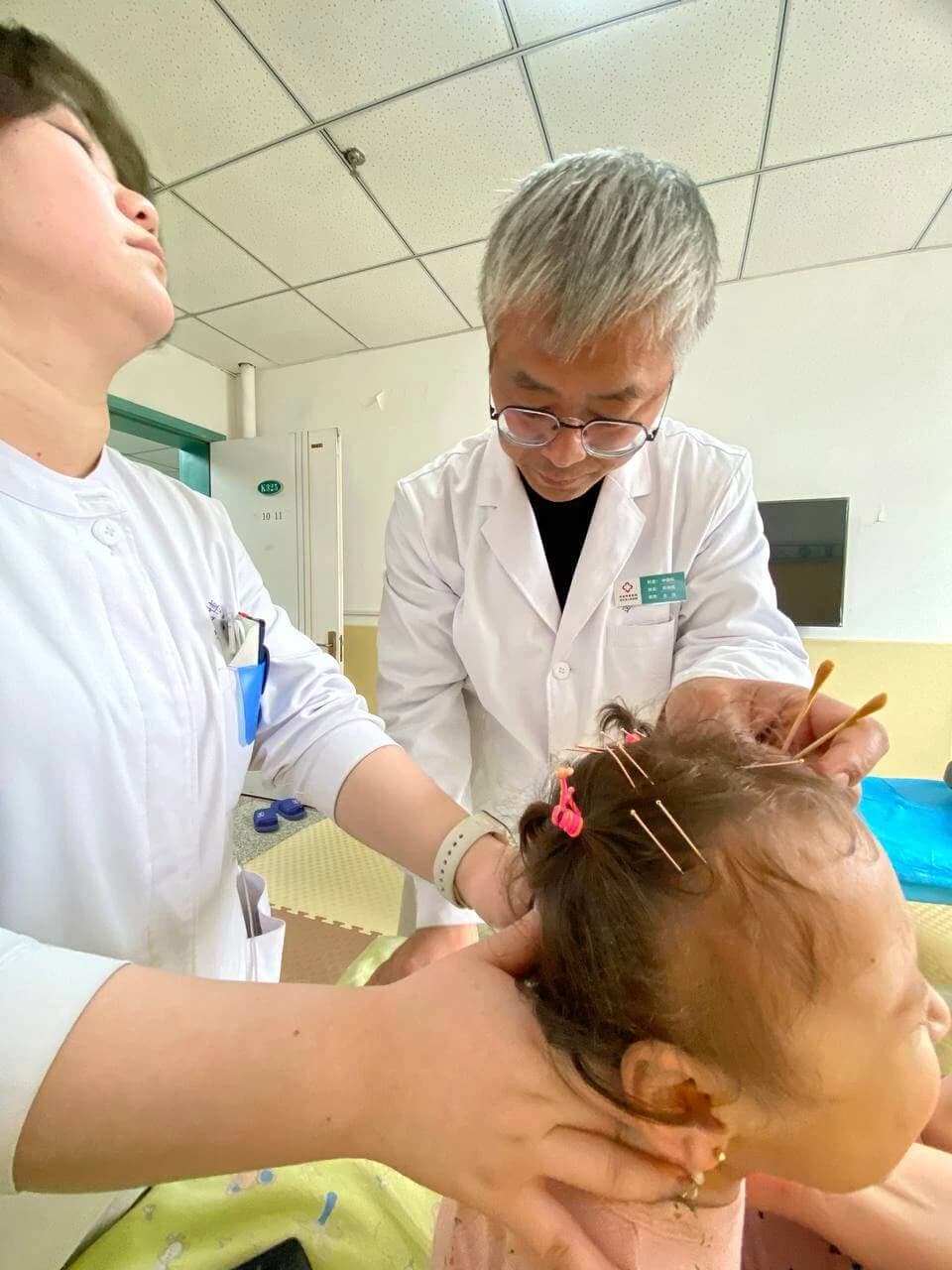
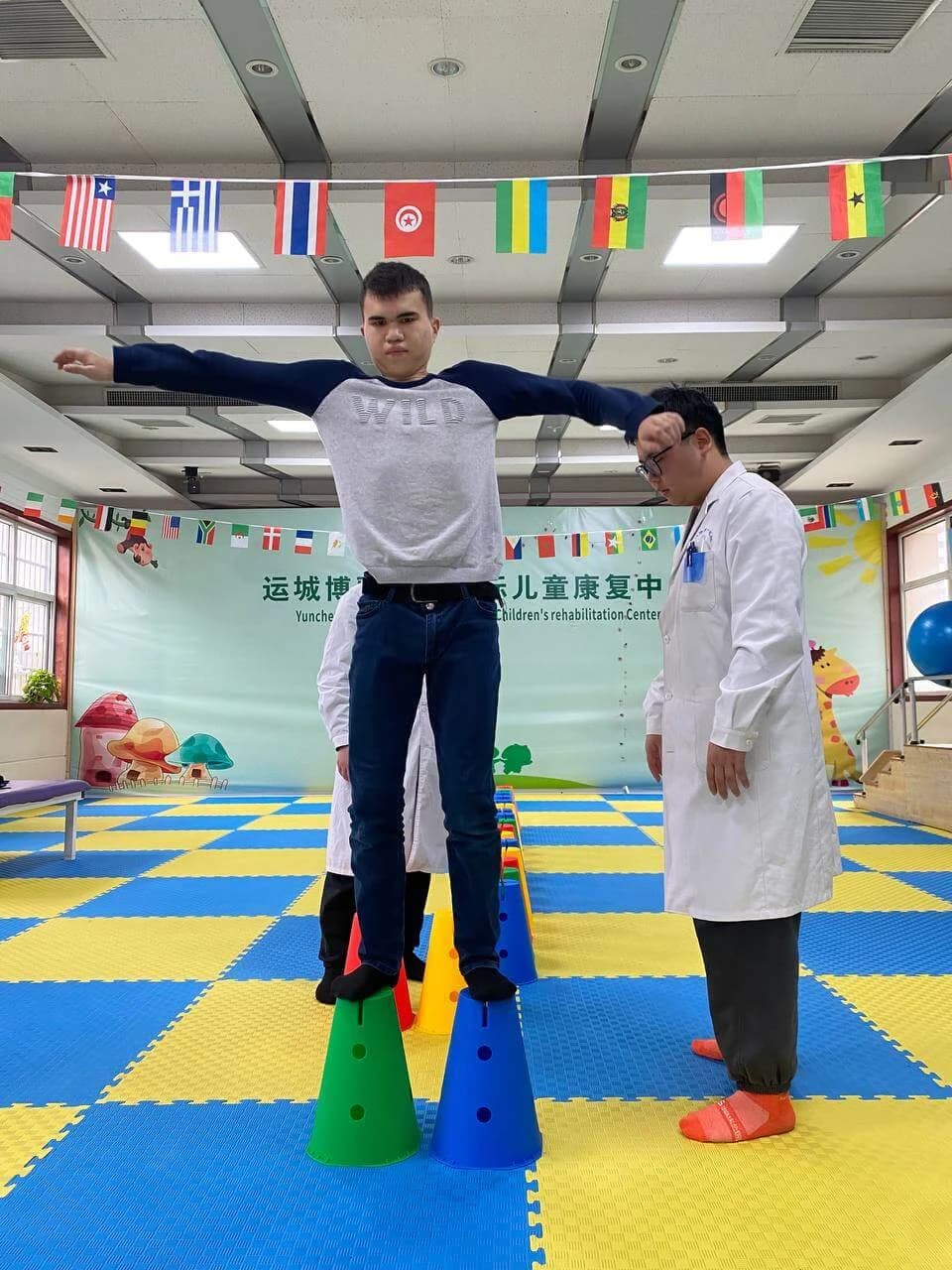
At Boya Hospital (Yuncheng, Shanxi Province), stereotypies are worked with inside the general pediatric neurological rehabilitation program. The base is sensory integration: on swings, a trampoline, balance boards, and with tactile materials the child receives vestibular, proprioceptive, and tactile input in a manageable form, and the need to source it independently goes down. Occupational therapy occupies the hands with a meaningful activity that has a beginning and a result. Exercise therapy and apparatus-based physiotherapy come in when there is a motor component behind the repetitive movements as well — for example, toe-walking with increased tone in the calf muscles. Traditional Chinese Medicine procedures — scalp acupuncture, body acupuncture, pediatric Tui Na massage, herbal compresses — serve a supporting role and help reduce overall tension. Sessions run 6 days a week.
Why simply banning it does not work
A stereotypy usually does a clear job for the child, and when it is removed by force, the job does not go anywhere. In practice it looks like this: the child is not allowed to rock, so they start chewing their collar or banging against the back of the chair, anxiety grows, and with it the frequency of repetition. That is why a course takes another route: specialists look at the situations in which the repetition intensifies, reduce overload, provide the needed sensations during sessions, and make the schedule predictable. Only what genuinely gets in the way of learning or is unsafe gets limited.
What counts as progress
A realistic benchmark is not the complete disappearance of stereotypies but a change in the role they play in the child's life: the repetitive actions take up less time, interrupt sessions less often, give way to an offered alternative more easily, and changes to the schedule are tolerated more calmly. These observations are recorded during the course and used to adjust the program. The recommended length is 2–3 months. The document-based consultation is free, and there is no prepayment: you pay on site and only for what your child has actually received.
Causes
Stereotypies are most often seen in Autism Spectrum Disorder, and also with sensory differences, developmental delay, and anxiety. For the child this is usually a means of self-regulation: obtaining missing sensations or, conversely, shutting out an excess of noise and bustle.
Symptoms
Rocking, hand-flapping and shaking, toe-walking, tapping, repeated sounds and phrases. In play — lining objects up in a row, spinning wheels, the same scenario over and over. Rituals and a painful reaction to change often come with it.
Diagnostics
The assessment involves a neurologist and a psychologist: observation of the situations in which the repetition intensifies, plus evaluation of the sensory profile, speech, and play. Toe-walking is looked at separately — sometimes it is not a habit but increased tone or shortened calf muscles.
Prognosis and rehabilitation approach
The task is not to ban the stereotypy but to understand its function and offer an alternative that meets the same need. Once the child gets the sensations they need during sessions and the day becomes predictable, the need to repeat usually declines on its own.
How rehabilitation works
Diagnostics
Comprehensive examination and patient assessment by an international team of specialists
Rehabilitation plan
Development of an individual rehabilitation program considering diagnosis specifics
Therapy
Intensive course of procedures: physical therapy, massage, physiotherapy, acupuncture and other methods
Results
Progress evaluation, home recommendations and maintenance therapy plan
Rehabilitation procedures: Stereotypies
Frequently asked questions: Stereotypies
Book a free consultation
Send us the medical records and a short video — Boya doctors will review the materials and tell you how they can help. A coordinator will get back to you within 5 minutes.